Mechanical Man Anatomy Diagram: Robot as Human Body Analogy, c.1930s
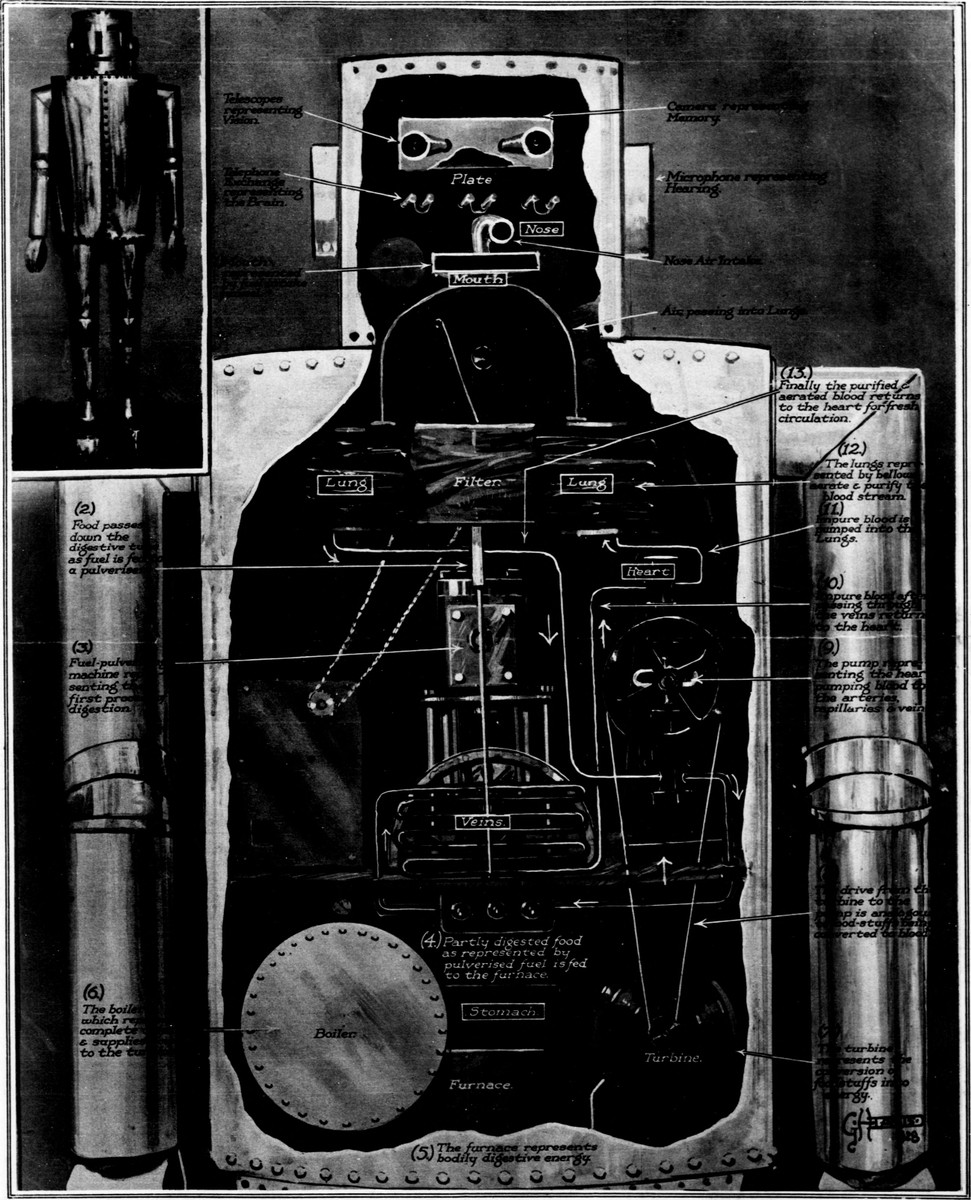
Subverting pure narrative pulp convention, this extraordinary cutaway diagram maps human biological systems onto a riveted metal robot chassis — lungs as filters, stomach as furnace and boiler, heart as pump, veins as plumbing circuits. Numbered annotations walk the viewer through digestion, circulation, and respiration reframed as industrial engineering. The dual inset panels show the full robot exterior alongside a cylindrical component detail, merging anatomical illustration tradition with retro-futurist mechanical anthropomorphism in a breathtakingly literal man-machine synthesis.
Dense with annotated narrative layering, this image packs an entire philosophy of mechanized humanity into a single diagram — every organ reimagined as industrial hardware. The visual storytelling is methodical yet visionary, achieving pulp ambition through pseudo-scientific rigour rather than action spectacle.
“Telescopes representing Vision. Cameras representing Memory. Microphone representing Hearing. Turbine representing the Brain. Plate. Nose. Mouth. Nose Air Intake. Air passing into Lungs. Lung. Filter. Lung. Heart. Veins. Stomach. Boiler. Furnace. Turbine. (2.) Food passes down the digestive tract as fuel is fed to a pulveriser. (3.) Fuel-pulverising machine representing the first process of digestion. (4.) Partly digested food as represented by pulverised fuel is fed to the furnace. (5.) The furnace represents bodily digestive energy. (6.) The boiler which receives completely & supplies to the turbine. (9.) The pump representing the heart pumping blood to the capillaries & veins. (10.) Impure blood after passing through the veins returns to the heart. (11.) Impure blood is pumped into the Lungs. (12.) The lungs representing breathe aerate & purify the blood stream. (13.) Finally the purified & aerated blood returns to the heart for fresh circulation.”