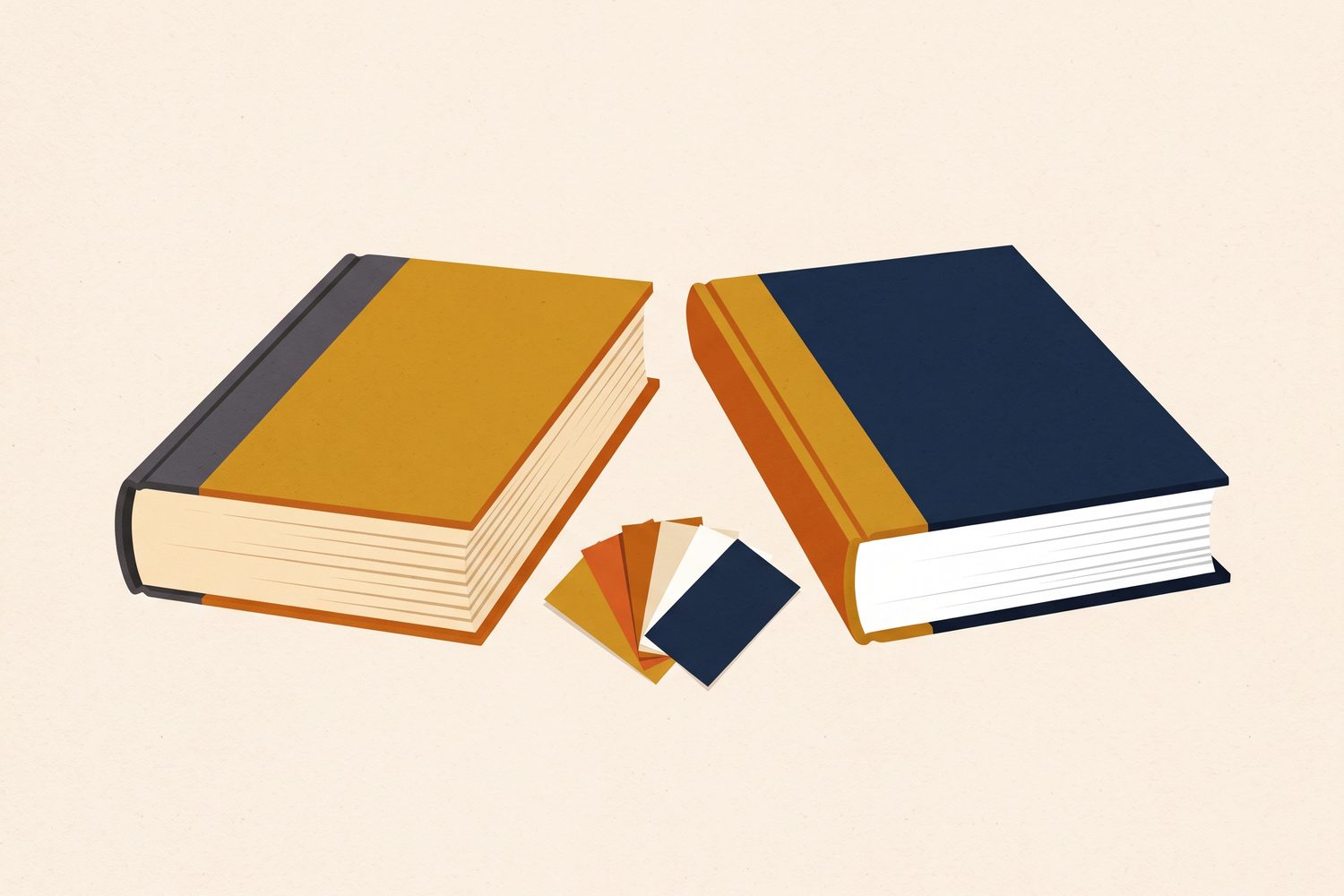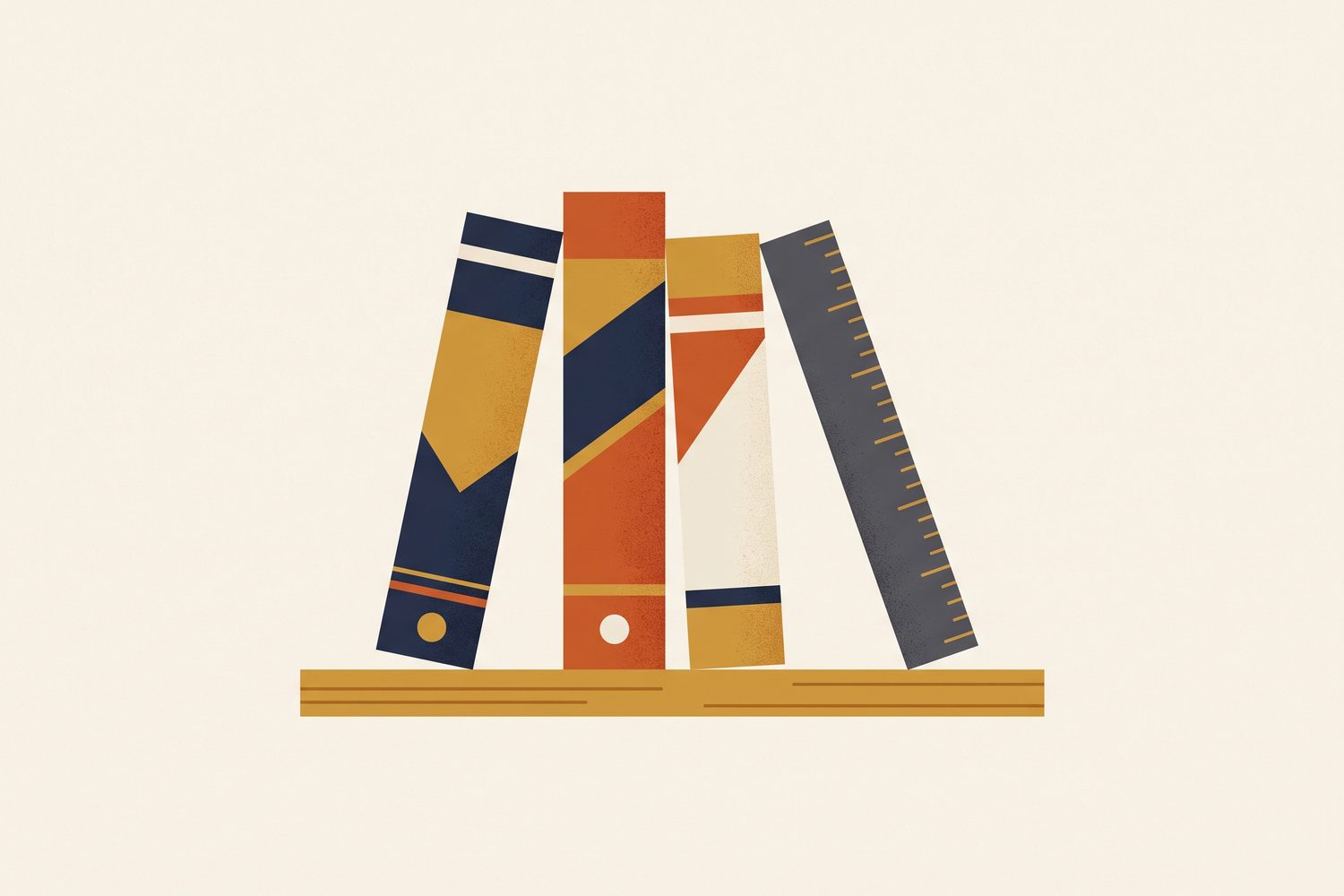
Choosing a trim size for your novel isn’t about finding a single “correct” answer. In fiction, you’ll find three practical and universally supported options: 5 × 8, 5.5 × 8.5, and 6 × 9. Every major print-on-demand service—KDP, IngramSpark, B&N Press, Lulu—handles these sizes, and they all fit on standard bookstore shelves. Your choice isn’t about right versus wrong; it’s about the subtle signals you send to readers and the underlying economics of your book.
The Three Go-To Trim Sizes
5 × 8 — The Classic Pocket-Sized Paperback. This size evokes the feel of a traditional mass-market novel. It’s an excellent choice for shorter books, as it gives a 60,000-word manuscript satisfying heft without appearing too thin. You’ll often see this trim in romance, novellas, and shorter genre fiction.
5.5 × 8.5 — The Literary Digest. This trim has become shorthand for a “literary trade paperback.” It’s a popular choice for literary fiction, essay collections, and more subdued genre titles. Think of it as the middle ground: it offers more page area than a 5 × 8 book without assuming the bold, textbook-like presence of a 6 × 9.
6 × 9 — The Workhorse Trade Paperback. This is the most common size in self-publishing, a standard for commercial fiction, thrillers, epic fantasy, and most nonfiction. Its primary advantage is density: it fits more words on each page. For a long manuscript, this means fewer total pages, a slimmer spine, and a lower print cost.
How Trim Size Changes Your Book
Changing your trim size directly impacts your page count, setting off a chain reaction that affects your spine width, cover dimensions, printing costs, and even whether you can have text on the spine (which requires a minimum of 79 pages). As a rule of thumb, scaling up from 5 × 8 to 6 × 9 reduces your page count by about 20% to 25% for the same manuscript and interior layout.
Three things follow:
- Print Cost: Since KDP charges per page, the lower page count of a 6 × 9 book typically means a cheaper printing cost per copy, leaving more room for your royalty.
- Spine Presence: Fewer pages mean a thinner spine. A 320-page book at 5 × 8 will have a more substantial spine (with more room for title text) than the same text printed at 6 × 9.
- Cover Art: Each trim is a different rectangle (5×8 has a 1:1.6 ratio, 5.5×8.5 is about 1:1.55, and 6×9 is 1:1.5). Art designed for one size will be slightly cropped on another. The trim size needs deciding before the cover is finalized; the precise dimensions come from the cover size calculator.
A Practical Starting Point
If you’re not sure what’s typical for your genre, here’s a sensible default: Use 6 × 9 for long books (90,000+ words or most nonfiction) and 5 × 8 or 5.5 × 8.5 for shorter fiction. Five successful books from the same subgenre, virtual or physical, show what size readers expect, and that usually matters more than any general guideline.
Sources
- Reedsy: Standard book sizes in publishing — genre conventions per trim
- Blurb: Standard book sizes & dimensions — trade paperback size ranges
- KDP: Print Options — supported trims and page ranges