The script
The script is logographic. A sign stands for a word or a whole phrase, not a sound. Király and Tokai likely demonstrated this, and this project went a long way to validate it. Several hundred signs are in use and the writing runs right to left.
Where the signs came from is not settled as the script occurs in no other document. A logographic script is not tied to any one language. That is an argument from the structure of the script, not a tested result.
One sign at a time
The shuffler below shows one sign at a time. It displays the sign's code and the reading this project gives it.
A sign drawn beside its code is this edition's own, traced from the manuscript's ink, not taken from any font; the tracing is under way and covers the common signs first. For the rest, if you have Király and Tokai's own font installed from their site, the sign appears in it. Their font is not hosted here; the signs on this page are this edition’s own outlines.
A sign can be a whole phrase
Phrases are written without a space. The example Király and Tokai print is 'you-Mary', a single sign made of their sign for the second person pronoun joined to their sign for Mary.
folio 137v
Both halves are in their dictionary. The joined sign is not, and it is written without a space. Reading signs apart this way produced 1,282 readings their dictionary does not contain.
The numerals
Numerals are strokes that add. A 'ten' written after a group multiplies that group by ten. This was checked four times. Ten-ten-ten-ten is forty. Two-two-ten is also forty. Six-two is eight. Six-six is twelve.
checked against a number the source supplies
two·two·ten = (2 + 2) × 10 = forty the forty days of rain
six·two = 6 + 2 = eight the circumcision on the eighth day
six·six = 6 + 6 = twelve the twelve apostles
The marks
The marks in the rendering have specific meanings. A plain word is read. A word with * was read from one passage. A word in [brackets] is a restoration. A hyphen inside a word means one sign read as smaller signs. A ~ marks a spelling variant.
folio 004v, lines 10 and 11, as this edition prints them
11 and angel Satan pray and forty days forty nights
Underlined words carry a mark. forty days forty nights is four signs Király and Tokai read together as one phrase; each forty is the ten-ten-ten-ten above. Satan is one sign built of their signs for hide and angel, which they read as Satan or Lucifer. A hyphen, as in from-father, is one sign read as the smaller signs inside it. A ~ is a spelling their own apparatus files as a variant, and * is a word read from one passage only.
The drawings
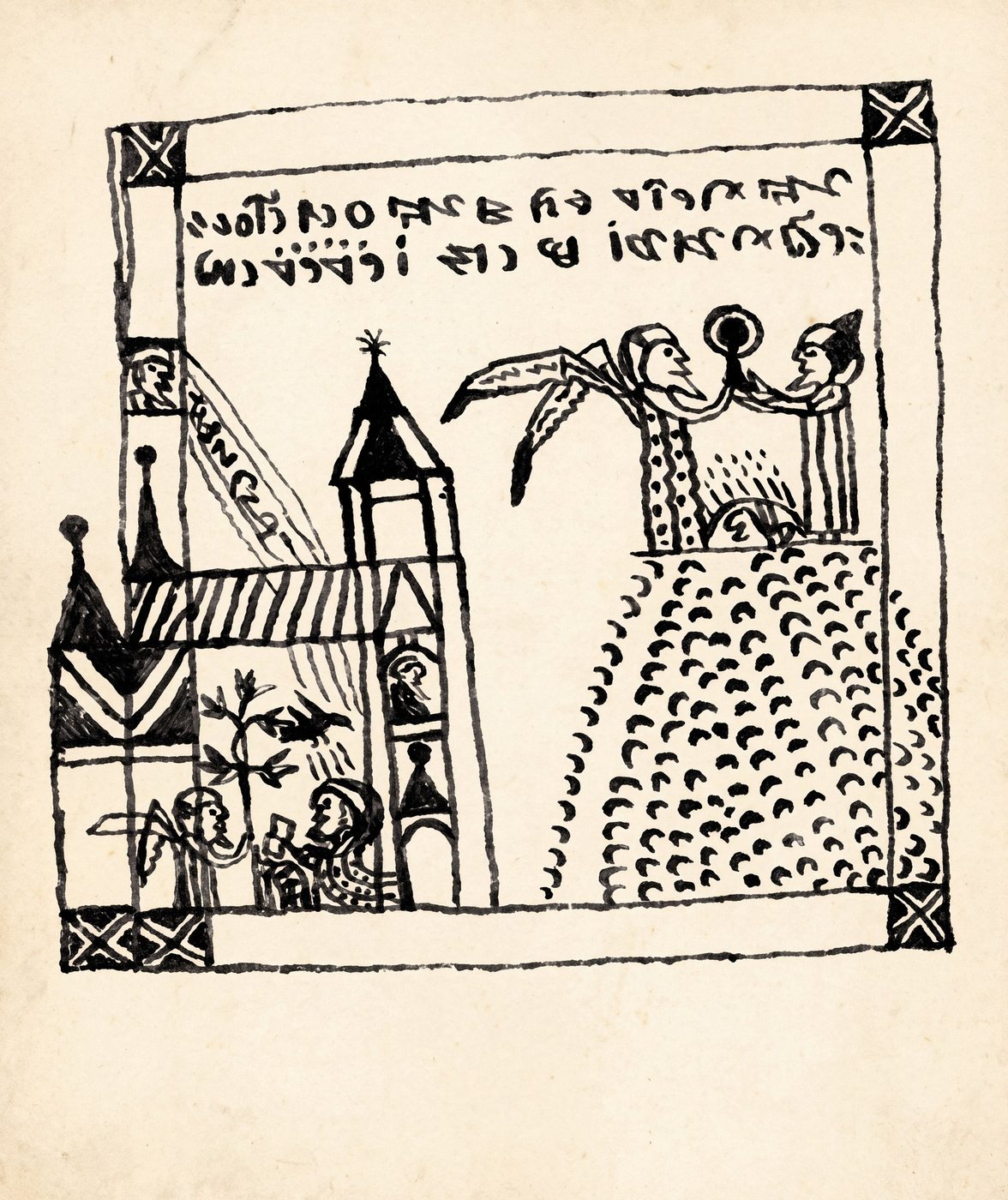
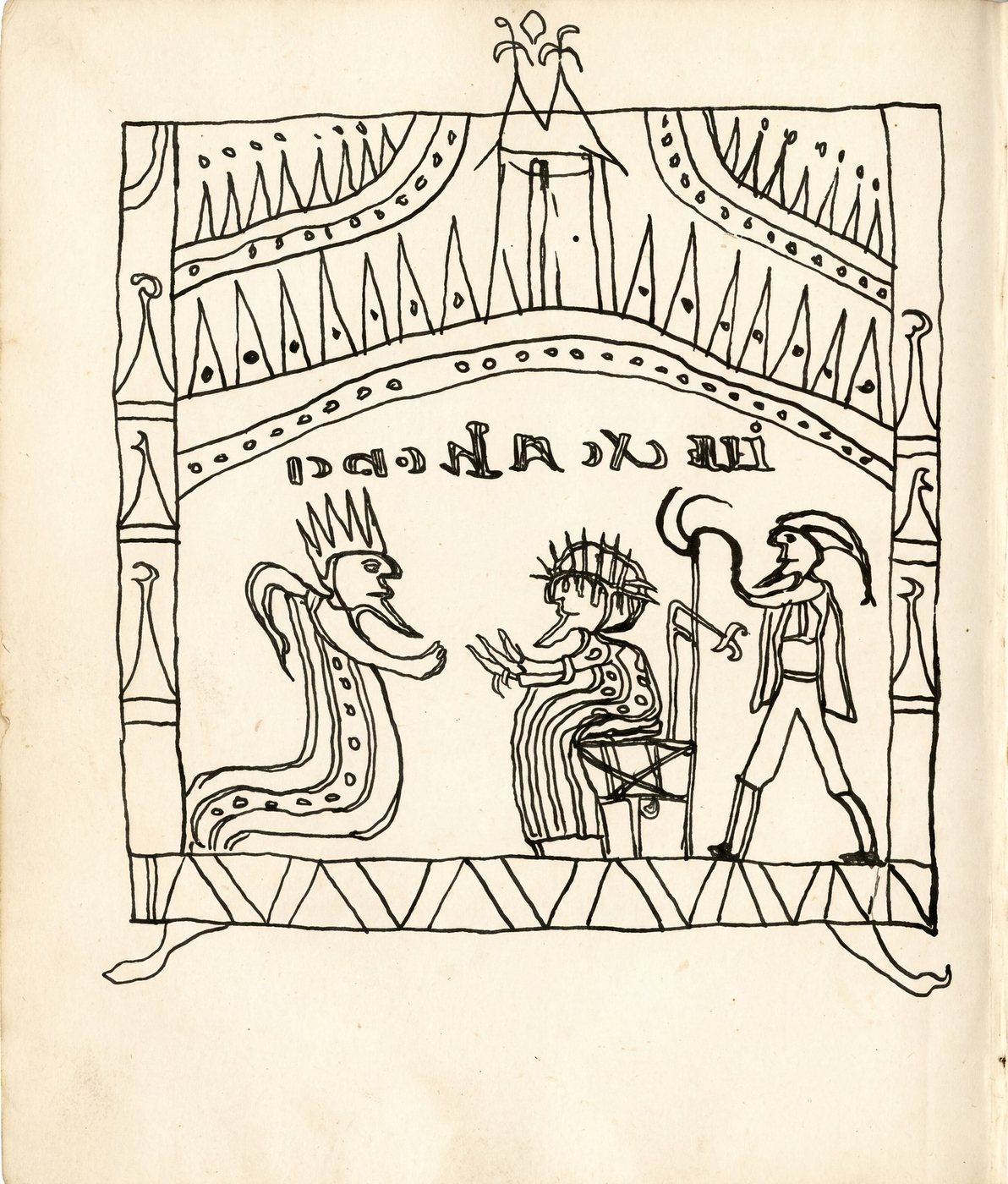
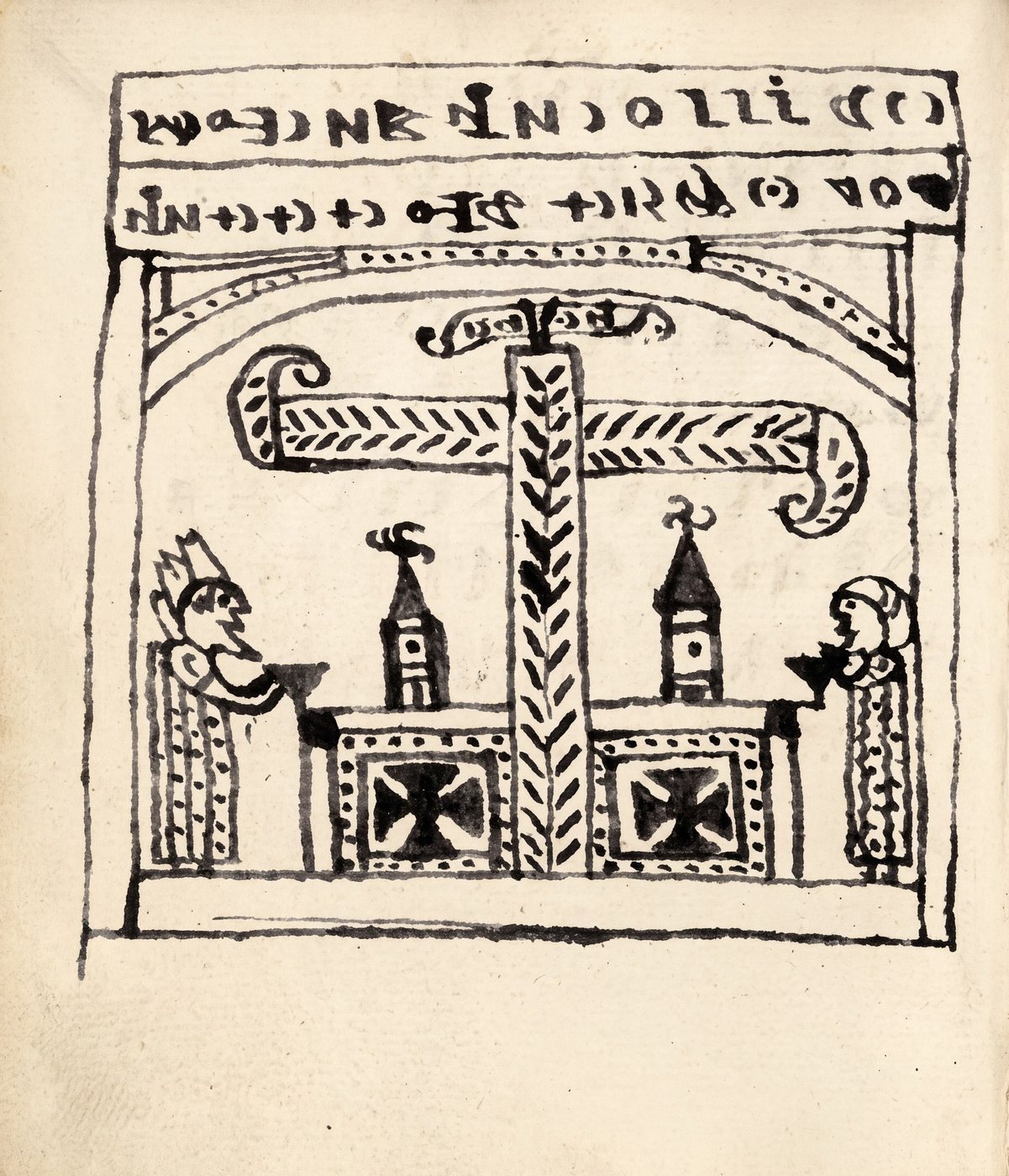
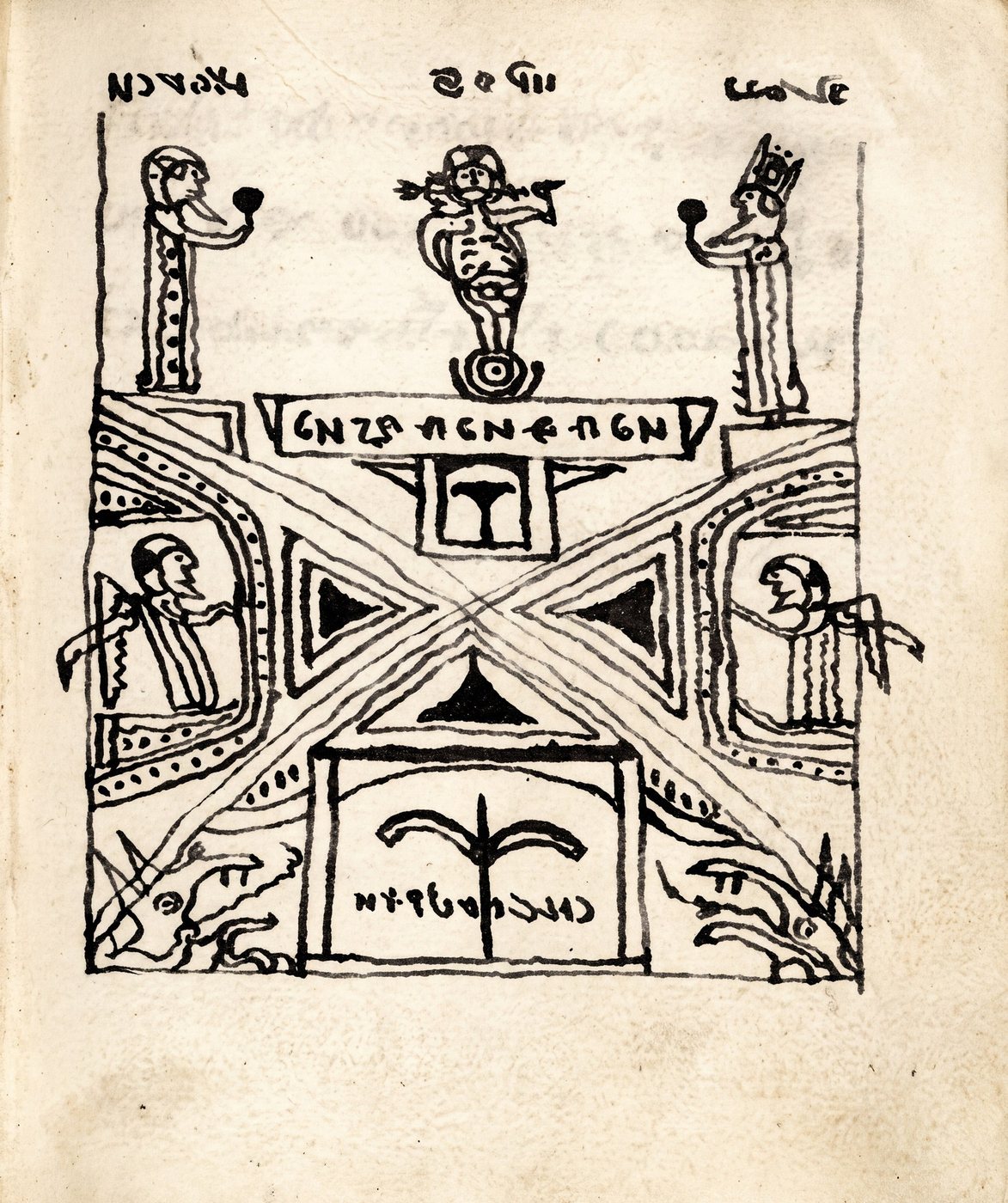
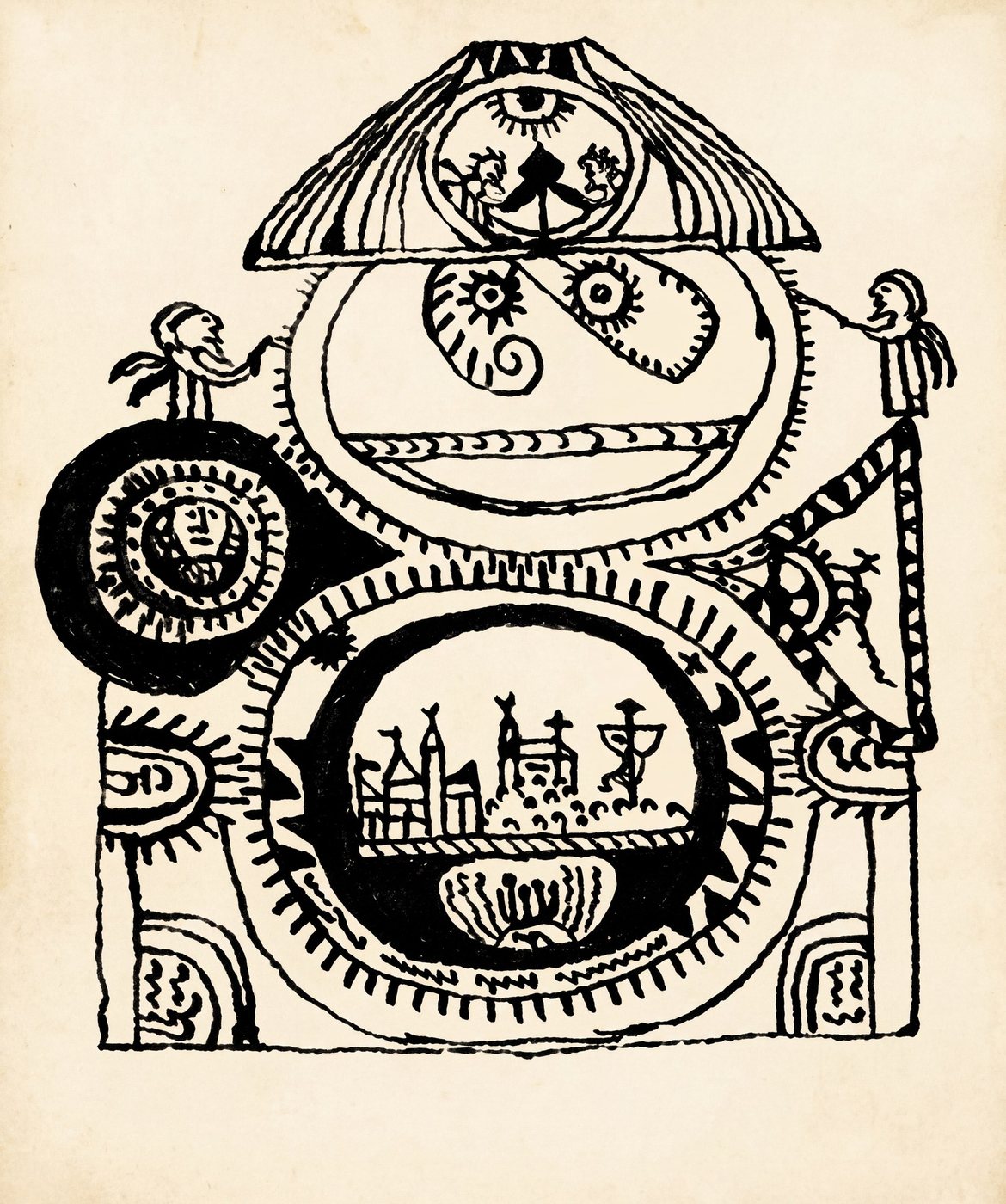
Twenty-six folios carry pictures. The plates in this edition were redrawn by an image model from the library's low-resolution scan. They are new drawings that follow the scribe's composition.
Licence · How to cite · Sources and data · Repository · Contact